We've managed over $1.2 million in Google Ads spend across dozens of accounts, maintaining a 98.3% average optimization score. Along the way, we've uncovered some uncomfortable truths that most agencies, gurus, and platform reps will never tell you. These aren't theoretical — they come from real campaigns, real budgets, and real results. If you're running Google Ads or thinking about it, these five truths could save you a significant amount of money.
Truth #1: People Don't Actually Read Your Ads
This one stings, but it's true. Users are often on autopilot when they search — they type a query, scan the results, and click the first thing that looks relevant. They're not carefully reading your headlines or weighing your value proposition. They're reacting.
Here's a real example that illustrates this perfectly. We ran Google Ads for a dental practice in a mid-sized city. Patients who already had a dentist would search for their existing clinic by name — something like "Smith Family Dental" — and our client's ad would appear at the top of the results. The user would click it, call the number, and be completely confused when they reached the wrong office. They weren't looking for a new dentist. They weren't reading the ad. They just clicked the first result.
The fix? Tighten your keyword targeting. Switch to exact match keywords so your ads only appear for highly relevant searches. And critically, add competitor brand names as negative keywords so you're not paying for clicks from people who are actively looking for someone else. Wasted clicks are wasted budget — and this is one of the most common and preventable sources of waste we see.
Truth #2: Mobile Traffic Dominates — Far More Than You Think
Most advertisers know mobile is important. But the actual numbers are staggering. On one of our largest accounts — with nearly $500,000 in total spend — we found that 85 to 90 percent of all clicks, costs, and conversions came through mobile devices. Desktop was almost an afterthought.
What does this mean in practice? Your landing pages, call-to-action buttons, forms, and load speeds need to be built mobile-first — not mobile-friendly as an afterthought. If your landing page is slow on a phone, hard to navigate with a thumb, or requires pinching and zooming, you are losing conversions at scale.
We also recommend using call extensions and call-only ads for service-based businesses, since mobile users are far more likely to call directly from a search result than to fill out a form. Optimizing for mobile isn't optional — it's where the overwhelming majority of your budget is being spent.
Truth #3: Every Campaign Needs Two People — A Technician and a Manager
Running Google Ads well is not a one-person job. There are two distinct roles that need to be filled, and conflating them is one of the most common reasons campaigns underperform.
The technician handles the day-to-day operations: adding negative keywords, adjusting bid strategies, reviewing search term reports, and making sure the campaign is running cleanly. This is granular, detail-oriented work that requires consistent attention.
The manager takes a higher-level view on a weekly basis: reviewing key performance indicators like cost per lead and cost per click, assessing whether the search terms being triggered are actually relevant to the business, and making strategic decisions about budget allocation and campaign direction.
In our experience, most people perform significantly better when there's a manager reviewing results — even if that manager is just a second set of eyes. When you're deep in the weeds of a campaign, it's easy to miss the forest for the trees. A manager-level review creates accountability and catches strategic drift before it becomes expensive.
Truth #4: The Algorithm Changes Every Six Months — And It Will Break What's Working
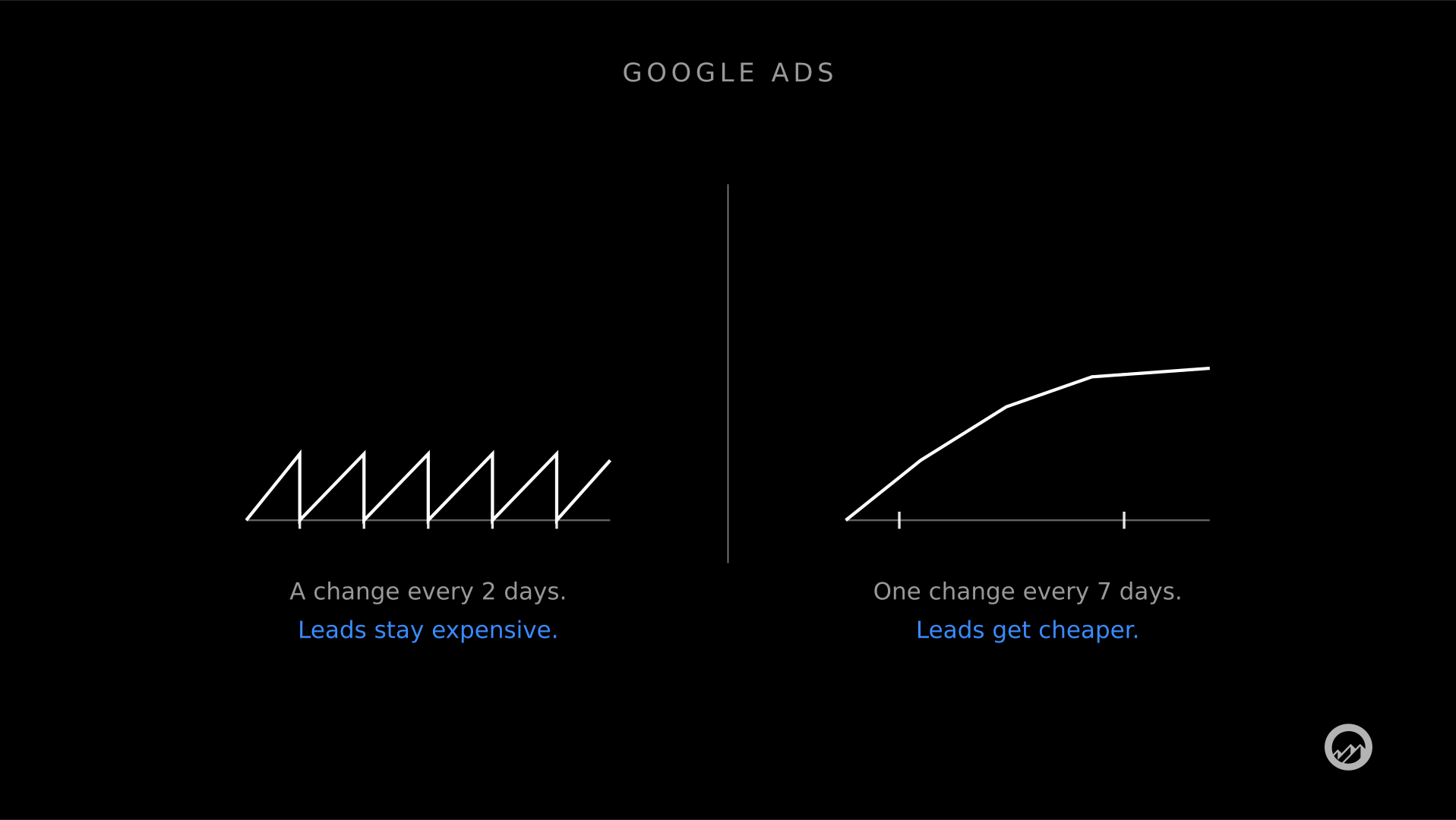
Google's algorithm is not static. Roughly every six months, something meaningful shifts — a change in how broad match works, a new smart bidding update, a shift in how the auction values certain signals. And when it happens, campaigns that were performing beautifully can suddenly plateau or decline for no obvious reason.
This is one of the biggest advantages agencies have over solo advertisers. When you're managing hundreds of accounts simultaneously, you start to notice patterns. You see the same performance dip across multiple campaigns in different industries at the same time. That's a signal — and it allows you to adapt faster than someone managing a single account in isolation.
If you're managing your own ads, build in a habit of quarterly strategy reviews. Don't assume that what worked last quarter will work next quarter. Stay connected to the Google Ads community, follow platform announcements, and be willing to test new approaches when performance starts to slip.
Truth #5: Google Does Not Respect Your Budget
This is the one that surprises people the most. You set a $1,000 monthly budget and expect to spend $1,000. But Google doesn't work that way. Depending on auction activity and demand, you might spend $500 — or you might spend $2,000. Google's daily budget system allows for significant overspend on high-traffic days, and it can take time for the algorithm to self-correct.
There is a workaround: setting a monthly spend limit at the account level. This creates a hard cap that prevents Google from exceeding your total monthly budget. However, it comes with its own problem. If the algorithm burns through your budget in the first two weeks of the month, your ads go dark for the remaining two weeks — meaning you lose visibility during a period when potential customers are still actively searching.
Our recommendation: check your overall account spend on a weekly basis. Don't wait for the end of the month to discover you've overspent or gone dark. Weekly monitoring gives you the visibility to make adjustments before small problems become expensive ones.
Final Thoughts
Google Ads is one of the most powerful tools available for generating leads and driving growth — but it rewards those who understand how it actually works, not how it's marketed to work. These five truths aren't meant to discourage you. They're meant to give you a more honest foundation so you can make smarter decisions with your budget.
We'd love to hear from you — have you experienced any of these firsthand? Drop your Google Ads stories in the comments below. And if you want more cutting-edge digital marketing strategies delivered straight to you, make sure to subscribe. There's a lot more where this came from.