
Generating 100 or more leads per day with Meta ads is not a fantasy — it's a repeatable outcome when you understand how the platform actually works. The problem is that most advertisers are unknowingly fighting against Meta's AI, misreading their campaign data, and making optimization decisions that actively hurt their results. This post breaks down the exact strategies that are working right now, illustrated with two real-world case studies, so you can stop guessing and start scaling.
What Most People Miss with Meta Lead Gen Ads
The biggest mistake advertisers make on Meta is treating the platform like it's still 2018. Back then, granular audience targeting, manual budget control, and single-creative ad sets were the norm. Today, Meta's machine learning has fundamentally changed the game — and the advertisers who are winning are the ones who have learned to work with the algorithm rather than against it.
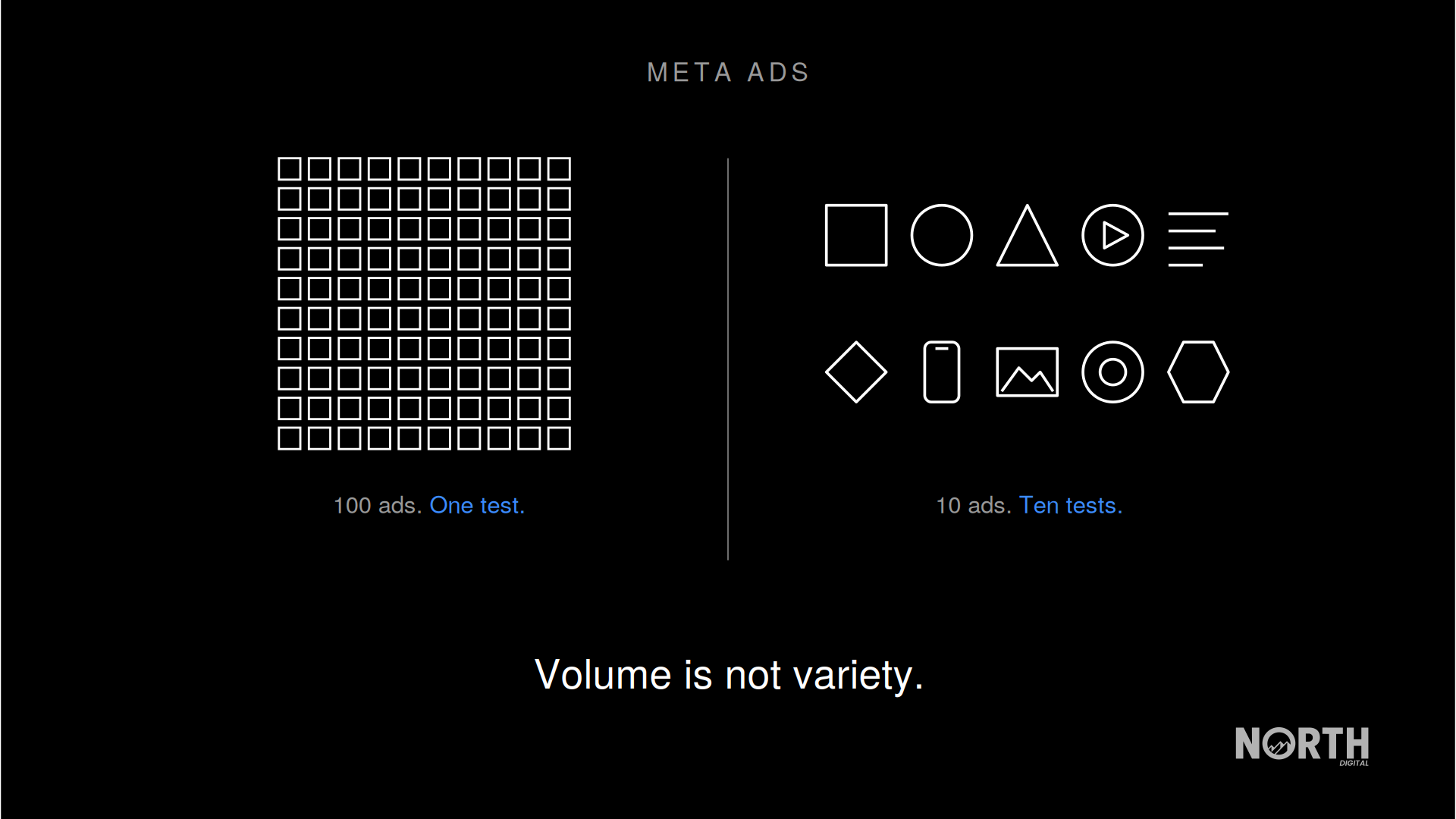
The core insight is this: Meta's AI is extraordinarily good at finding the right people for your offer — but only if you give it enough creative variety, enough budget flexibility, and enough room to operate. Constrain it too tightly, and you'll get mediocre results. Give it the right inputs and the right freedom, and the results can be remarkable.
Case Study 1: Dental Assisting School in Los Angeles
The first case study involves a dental assisting school based in Los Angeles running a Campaign Budget Optimization (CBO) campaign at just $31 per day. The campaign contained two ad sets: one featuring video creatives and one featuring image creatives.
The results were striking. The video ad set was delivering leads at $11 per lead, while the image ad set was coming in at $48 per lead. On the surface, this looks like an obvious call: kill the image ad set and pour everything into video. But that would be a costly mistake — and understanding why is one of the most important lessons in modern Meta advertising.
Video-Loving vs. Image-Loving Audiences
Not everyone on Meta consumes content the same way. Some users are naturally drawn to video — they stop scrolling, they watch, they engage. Others are image-lovers: they respond better to a well-crafted static visual. These two groups are distinct segments of your potential audience, and they don't overlap as much as you might think.
When you run both a video ad set and an image ad set inside a CBO campaign, Meta's AI automatically routes budget toward whichever ad set is performing better at any given moment. In this dental school example, the video ad set is receiving the lion's share of the $31 daily budget because it's converting more efficiently. But the image ad set is still capturing a segment of the audience that the video simply wouldn't reach — the image-loving users who would scroll past a video without a second glance.
Turning off the image ad set would mean abandoning that entire audience segment. Even at $48 per lead, if those leads convert into paying students, the economics can still be very favorable. The right move is to let Meta's AI do its job: allocate budget intelligently across both ad sets, maximizing total lead volume while keeping overall cost per lead as low as possible.
Campaign Budget Optimization (CBO): Let Meta Do the Math
Campaign Budget Optimization is the practice of setting your budget at the campaign level rather than the ad set level, and allowing Meta's algorithm to distribute that budget across your ad sets in real time. This is the preferred approach for scaling lead generation campaigns, and the dental school example illustrates exactly why.
When you manually allocate budget to individual ad sets, you're making a static decision in a dynamic environment. You're essentially saying, "I think this ad set deserves $20 and that one deserves $11" — but you're making that call without the real-time performance data that Meta's AI has access to. Meta knows which users are most likely to convert right now, based on signals you can't see: time of day, device, recent browsing behavior, and hundreds of other factors.
With CBO, you hand that allocation decision to the algorithm. It runs the complex math continuously, shifting budget toward whichever ad set is delivering the best results at any given moment. The result is a more efficient campaign overall — and more leads for the same daily spend.
Dynamic Creative: 250 Combinations, Optimized in Real Time
Dynamic Creative is one of the most powerful and underutilized features in Meta's advertising toolkit. Instead of creating a single ad with one image, one headline, and one body text, Dynamic Creative lets you upload multiple versions of each element and allows Meta to mix and match them automatically.
Here's what that looks like in practice: upload 10 different creative assets (videos or images), 5 different headlines, and 5 different body text variations. Meta will combine these elements into up to 250 unique ad combinations and serve each one to different users based on what it predicts will resonate best. It's essentially running a massive, continuous A/B test — but instead of waiting weeks for results, the algorithm is optimizing in real time.
The practical benefit is significant. Rather than guessing which creative will perform best and committing your entire budget to that guess, you let the data decide. Over time, Meta learns which combinations drive the most leads at the lowest cost, and it allocates impressions accordingly. This approach dramatically reduces the risk of creative fatigue and keeps your campaigns performing longer without constant manual intervention.
Targeting in 2026: Why Broad Beats Granular
If you're still spending hours building detailed interest-based audiences and layering demographic filters, you're working harder than you need to — and likely getting worse results. In 2026, broad targeting is outperforming granular targeting for most lead generation campaigns, and the reason comes back to Meta's AI.
Meta's algorithm has become extraordinarily sophisticated at identifying who is likely to respond to your offer — often better than you can predict manually. When you layer on too many targeting restrictions, you're not refining your audience so much as you're limiting the algorithm's ability to find the best prospects. You're essentially telling a world-class navigator to only use certain roads.
For local and regional campaigns — like the dental assisting school in Los Angeles — the recommended approach is simple: set a geographic radius around your service area, apply basic age and gender filters if they're genuinely relevant to your offer, and let Meta handle the rest. Lookalike audiences, while still valuable for large national or global campaigns, are largely unnecessary for local businesses where the geographic constraint already does most of the targeting work.
On-Meta Lead Forms: Reducing Friction, Improving Quality
Meta's Instant Forms — also called on-Meta lead forms — allow users to submit their contact information without ever leaving the Facebook or Instagram app. When someone clicks your ad, a pre-filled form appears with their name, email, and phone number already populated from their Meta profile. They confirm the details and submit in seconds.
The reduction in friction is dramatic. Compared to sending users to an external landing page — where they have to wait for the page to load, navigate the layout, and manually type their information — Instant Forms can dramatically increase conversion rates and lower cost per lead.
Two-Factor Authentication for Lead Quality
A common concern with Instant Forms is lead quality — if it's too easy to submit, will you end up with a flood of unqualified or accidental leads? Meta addresses this with a two-factor authentication option within the form. When enabled, users receive a verification code via SMS that they must enter to complete the submission. This extra step filters out casual clickers and ensures that the leads you receive have genuinely opted in.
In the dental assisting school example, the Instant Form collects the prospect's name, email, phone number, and a qualifying question about their interest in the program. The two-factor verification step ensures that the school's admissions team is following up with people who are genuinely interested — not just people who accidentally tapped an ad.
Case Study 2: Music Brand Coaching Program — 138 Leads in 48 Hours
The second case study is a music brand coaching program that generated 138 leads in just 48 hours at an average cost of 74 cents per lead. This campaign used a different structural approach — three distinct ad sets targeting different audience segments — and sent traffic to an off-Meta landing page rather than an Instant Form.
Three-Ad-Set Structure
The campaign was structured around three ad sets, each targeting a different audience:
- Retargeting — people who had previously engaged with the brand's content or visited their website
- US Lookalike Audience — a lookalike audience built from existing customers or high-value leads, targeted within the United States
- Global Advantage Plus Audience — a broad, algorithm-driven audience with no geographic restriction, giving Meta maximum freedom to find leads anywhere in the world
This structure makes sense for a coaching program with a digital product that can serve customers globally. Unlike the dental school — which is constrained to a local service area — a music coaching program can generate revenue from leads anywhere in the world, making a global ad set a logical addition.
Advantage Plus Audience: Giving Meta Maximum Freedom
The Advantage Plus Audience feature is Meta's most expansive targeting option. When you use it, you provide a seed audience — a starting point based on interests, behaviors, or demographics — but you give Meta permission to expand well beyond that seed if it identifies better prospects elsewhere. In practice, this means Meta can serve your ads to people who don't match your initial targeting criteria at all, if its models predict those people are more likely to convert.
For the music coaching program, the Global Advantage Plus ad set was a key driver of the 74-cent cost per lead. By removing geographic and demographic constraints and letting Meta's AI roam freely, the campaign was able to tap into high-intent audiences in markets where competition — and therefore ad costs — are significantly lower than in the US.
Off-Meta Landing Page and the Lead Magnet Strategy
Rather than using an Instant Form, this campaign directed traffic to an external landing page tracked with the Facebook Pixel. The landing page offered a lead magnet — a free piece of valuable content (such as a guide, checklist, or mini-course) that prospects could access in exchange for their email address.
The lead magnet strategy is particularly effective for coaching programs and information products because it accomplishes two things simultaneously. First, it dramatically lowers the barrier to entry — asking someone for their email in exchange for something valuable is a much easier conversion than asking them to book a call or make a purchase. Second, it pre-qualifies leads by attracting people who are genuinely interested in the topic, making the subsequent sales process more efficient.
The Facebook Pixel on the landing page allows Meta to track which users completed the opt-in, feeding that conversion data back into the algorithm. This creates a powerful feedback loop: the more conversions Meta records, the better it gets at finding similar users who are likely to convert — further driving down cost per lead over time.
Key Takeaways
Generating 100+ leads per day with Meta ads is achievable for businesses of all sizes — but it requires a shift in mindset. Here are the principles that tie everything together:
- Don't kill ad sets based on cost per lead alone. A higher CPL ad set may be reaching a distinct audience segment that your cheaper ad set can't access. Look at total lead volume and downstream conversion value.
- Use CBO to let Meta's AI allocate budget dynamically. Manual budget allocation is a static solution to a dynamic problem.
- Embrace Dynamic Creative. Upload multiple creatives, headlines, and body texts and let the algorithm find the winning combinations. Aim for 10 creatives, 5 headlines, and 5 body text variations.
- Go broad on targeting. For local campaigns, a geographic radius plus basic demographic filters is all you need. Trust Meta's AI to find the right people within that pool.
- Use Instant Forms with two-factor authentication for local service businesses. The friction reduction drives down CPL while the verification step protects lead quality.
- For digital products and coaching programs, consider a lead magnet with an off-Meta landing page. The lower barrier to entry can produce dramatically lower cost per lead, and the Pixel feeds valuable conversion data back to the algorithm.
- If your offer can serve a global audience, test a Global Advantage Plus ad set. Removing geographic constraints can unlock high-intent audiences in lower-cost markets and significantly reduce your average CPL.
The common thread across both case studies is the same: the advertisers who are winning on Meta in 2026 are the ones who have stopped trying to outsmart the algorithm and started learning how to work with it. Give Meta's AI the right creative inputs, the right budget flexibility, and the right structural setup — and it will find your leads.