
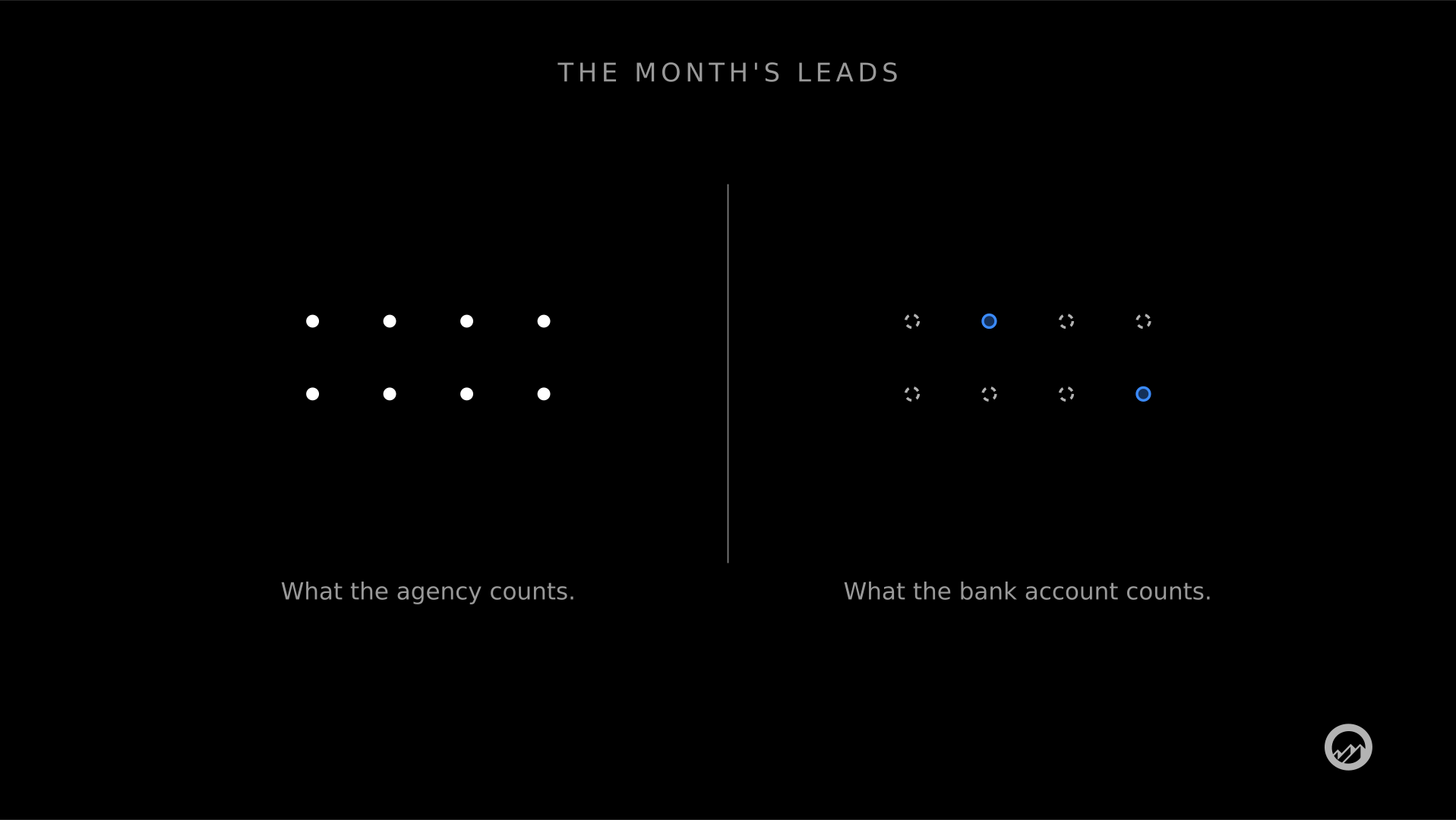
You run a clinic, a dental practice, or a trades business. You are paying an agency right now, or you are about to sign with one. The monthly report looks busy: clicks are up, impressions are up, maybe leads are up too. But when you look at your bank account, you honestly cannot say what that spend brought back.
A new article says the reason for that starts before the agency does a single hour of work. I agree with it, and I want to walk you through why.
The mistake Entrepreneur is warning about
Entrepreneur, the business magazine, published a piece about a founder who hired a marketing agency eight months into his startup. Six months later he had a beautiful brand deck, a content calendar running like clockwork, and a few thousand new followers. He also had no new customers he could trace back to any of it.
When the author asked what success looked like in the original scope of work, the founder admitted they never defined it. The article's core argument is that the most expensive mistake happens before the contract is signed, because the agency and the client never agree on what the business needs to look like in six months for the money to have been worth it.
The article also makes a point I have seen play out many times: agencies report the metrics they can reliably influence. Follower growth and content volume are within their control. Whether any of it turns into revenue is harder to pin down, so it rarely makes the report.
My take: the easy metrics are the trap
This is an important article, and the trap it describes applies to every service business owner reading this. With paid ads it is easy to measure the things that are easy to measure: clicks, impressions, even leads. That sounds obvious, but it catches smart owners constantly, because a report full of rising numbers feels like progress.
The way I see it, only one question matters: how much revenue did the marketing generate? A lead that never answers the phone is worth nothing. A lead that becomes a $4,000 dental case or a full HVAC replacement is worth everything. If your agency cannot tell the difference between those two leads, neither can the ad platforms spending your money.
My bet is that most owners who feel vaguely disappointed with their agency are stuck exactly here. The reports are active, the calls are pleasant, and nobody can point to revenue.
What tracking revenue actually looks like
Here is the honest part: measuring revenue from ads is an automated plus manual process. There is no magic dashboard that does it for you. It takes real work from the agency and a little work from the client.
What we do at North Digital is simple to describe. Every single time a lead is generated, it goes into a spreadsheet. Our clients then make notes on what happened to each lead: did it turn into new business or not? Then we feed that data back into Google using offline conversion tracking, which means telling Google exactly which clicks turned into paying customers, even when the sale happened days later over the phone or in person.
That feedback loop changes what the machine optimizes for. Google stops chasing cheap clicks and starts chasing the kinds of people who actually became customers. In my experience, from more than a decade managing Google and Meta accounts for service businesses, that extra work makes all the difference in ROI. It is also why our clients stay with us month after month: they can see the revenue line, so the decision to keep going is easy.
The questions the article says to ask, and I second them
The Entrepreneur piece suggests asking any agency how you will both know in 90 days whether the work is succeeding. If the answer involves impressions or follower counts, take that as a warning. It also recommends asking for two or three examples where a past client saw a specific business outcome with a number attached.
I would add one more question for any agency running your Google or Meta ads: how do you track what happens to a lead after the form is filled out? If the answer is a blank stare, you now know what their monthly reports will look like.
How to prepare your business
1. Before signing any agency contract, agree in writing on the revenue outcome that defines success at 90 days.
2. Start a simple spreadsheet this week: every lead, its source, and whether it became paying business.
3. Ask your current or prospective agency whether they feed closed-sale data back into Google through offline conversion tracking.
If you want ads measured in revenue instead of clicks, book a call with us and we will show you exactly how the tracking works.