If you run a clinic, a dental practice, or a trades business, someone has probably already pitched you an AI receptionist. An agent that answers after hours, books jobs, and chases no-shows while you sleep. That pitch is about to get much louder, and I want you to hear my honest read on it before you sign anything.
What just happened
WIRED, the technology magazine, reports that hundreds of thousands of AI agents are about to enter the workforce in the coming months. These are systems built on large language models, meaning the same technology behind ChatGPT, designed to complete tasks on their own. Companies are giving them names, profile pictures, and spots on the org chart.
This is not fringe stuff. When Julie Bedard, a partner at the consulting firm Boston Consulting Group, and her colleagues polled 1,261 managers in January, 22 percent said their organizations had already added AI agents to corporate org charts. She expects that number to grow.
What these agents actually do
The examples in the piece are worth paying attention to, because they look a lot like the work in your business. Microsoft launched an agent called Scout in June, built to reschedule meetings and draft emails. A startup called Anything launched a platform called Skydive in August, with agents that have their own names and roles and work across Slack, email, and iMessage.
Christine Wendell, who runs a company called Pronto Housing and adopted Skydive early, uses agents to write contracts, schedule meetings, and send follow-up emails to customers. Her engineering team started saying they worked with Alice on a project. Alice is an agent. Follow-ups, scheduling, drafting, chasing: that is front desk work, and it is exactly the work service businesses struggle to staff.
The part the sales pitch skips: AI still makes mistakes
Here is where my opinion comes in, and I will not soften it. AI still gets things wrong, and you need to audit the work these agents do. In your business a mistake is a double-booked technician, a patient told the wrong price, or a hot lead that never got called back. Every one of those costs real money.
The way I see it, an agent is like a new hire who works fast and never sleeps but has been on the job for one week, forever. You would not let a week-one employee send contracts and quotes unchecked. Do not let an agent do it either. Build a review step into every task the agent touches, especially anything a customer sees. In my experience running ad accounts for a decade, the businesses that check their numbers weekly catch problems in days. The ones that set and forget find out months later.
An agent with an empty inbox is just a subscription fee
The second thing I want you to sit with is simpler. Most of these agents will be doing follow-up calling, scheduling, and customer chasing. That work only pays off if there is something to follow up on.
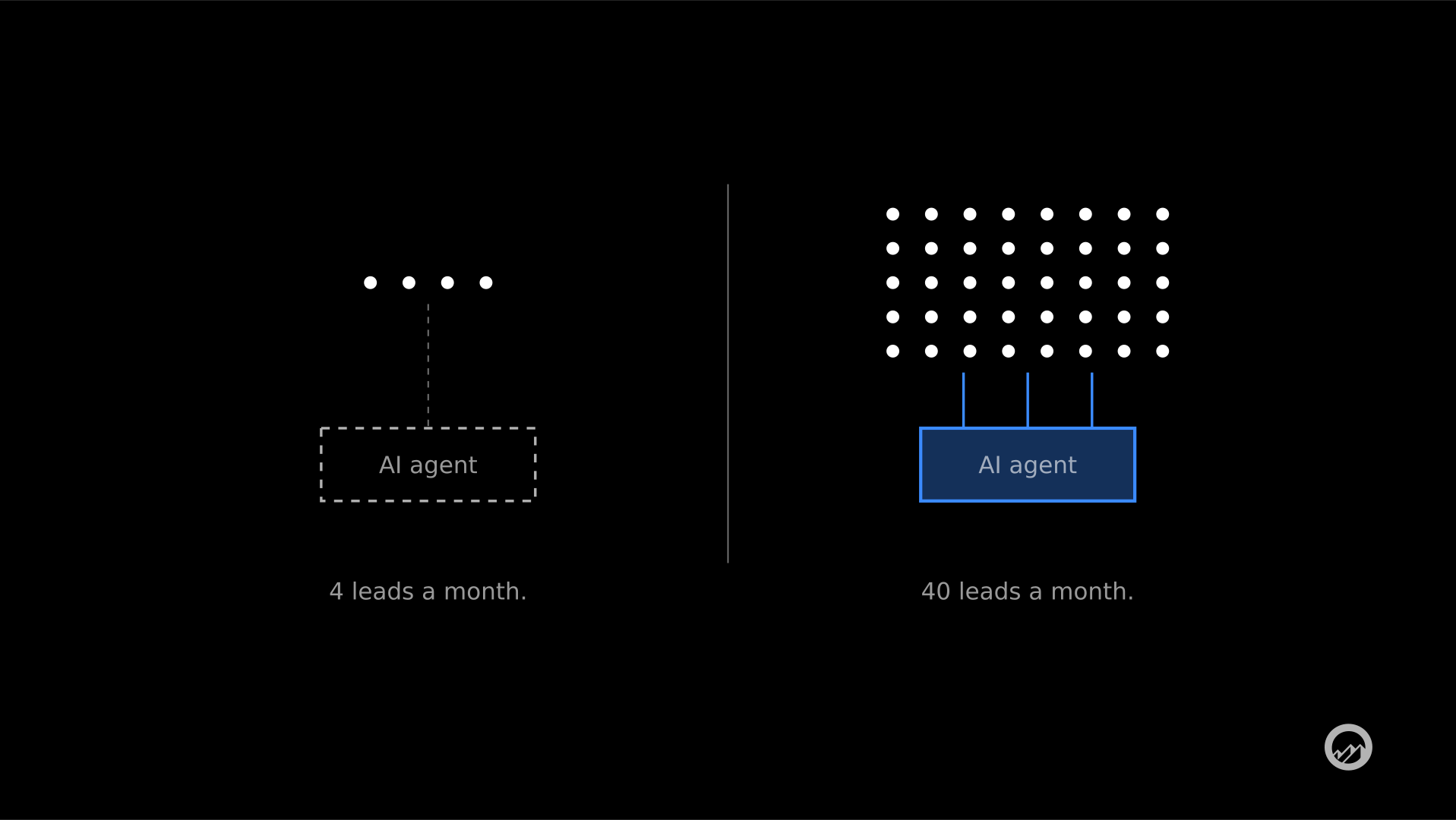
An agent that can respond to a lead in thirty seconds is worthless if you get four leads a month. Feed that same agent forty leads a month and it becomes one of the best hires you never made, because speed to lead and consistent follow-up are where most service businesses leak revenue. My bet is that the winners over the next few years will not be the owners with the fanciest agent. They will be the owners with the fullest pipeline, because the agent multiplies whatever volume you give it.
That is the connection to what we do all day. A steady, measurable stream of inbound leads from Google and Meta ads is the fuel these agents need. I expect the businesses pairing paid lead flow with AI follow-up to pull away from competitors who bought the agent and skipped the fuel. As a Google and Meta Partner for over 10 years, managing multiple millions in ad spend for service businesses, I have watched follow-up discipline separate the busy shops from the struggling ones. Agents will make that gap wider.
How to prepare your business
1. Write down every task you would hand an agent and flag which ones touch a customer directly.
2. Set a fixed weekly review of anything AI sends, books, or quotes on your behalf.
3. Count your inbound leads from last month before buying any agent, because that number decides whether it pays off.
If you want to make sure your lead flow is strong enough to make an AI agent worth hiring, we are always happy to talk it through.