If you run a dental practice, an HVAC company or a law office, someone has probably told you that ads are coming to ChatGPT and you should get in early. Before you move a dollar of budget, a new study has put real numbers on what those ads are worth, and the gap is large.
What the study found
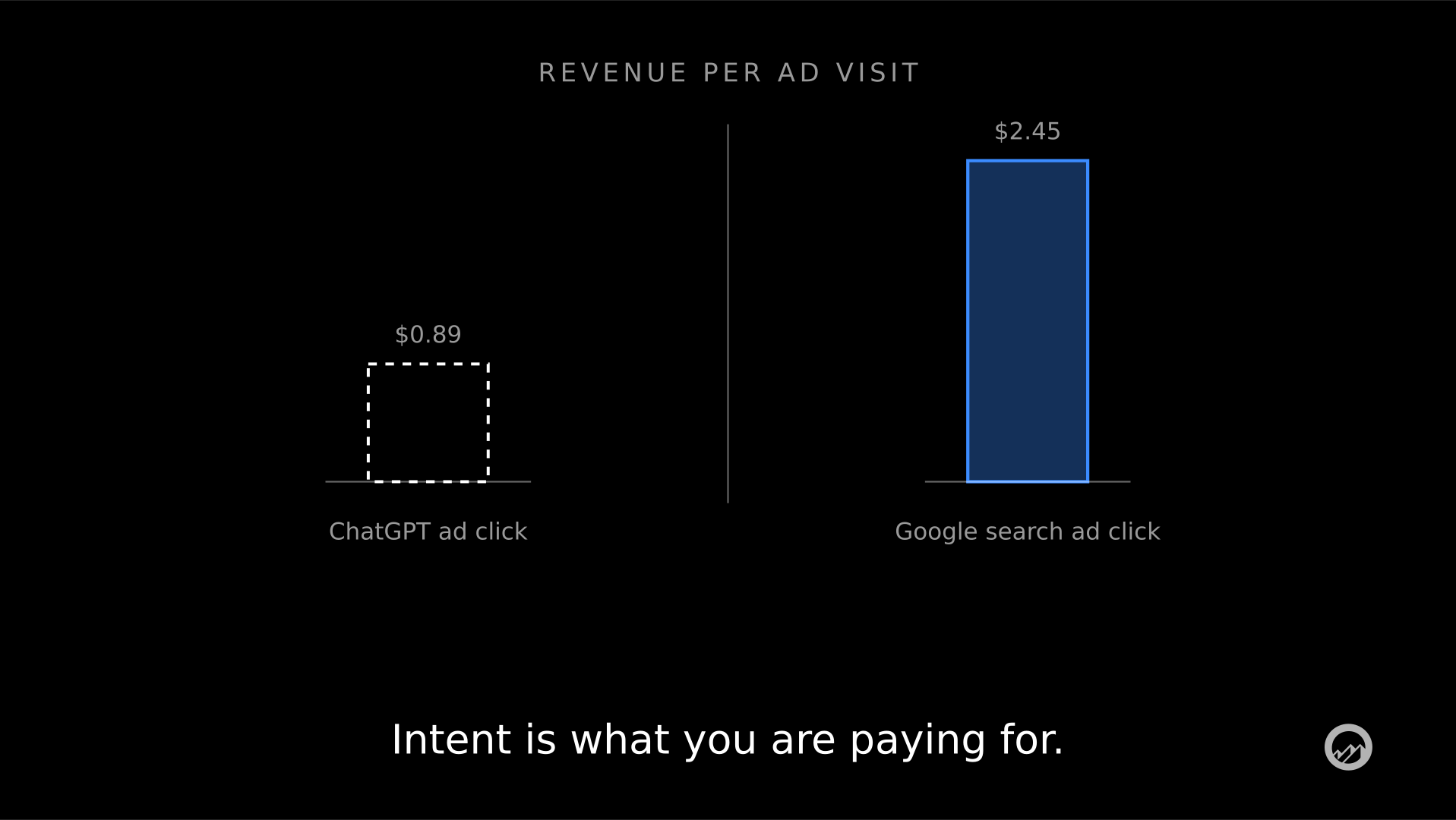
As reported by PPC Land, a publication covering paid advertising news, researchers Maximilian Kaiser of the Vienna University of Economics and Business and Christian Schulze of the Frankfurt School of Finance & Management followed 1,898 online shops through the country-by-country ad rollout from OpenAI, the company behind ChatGPT. In US traffic, a visit from a paid ChatGPT ad generated $0.89 in revenue. A visit from a paid Google search ad generated $2.45.
Conversion tells the same story. Paid ChatGPT visitors bought at 0.37%, against 1.17% for paid Google search visitors. Measured at paid search's rate of return, the authors calculate a ChatGPT click is worth about $0.26 to an advertiser, while the largest publicly known account paid $1.72.
The data behind this is serious: nearly 10 billion visitor sessions over 60 weeks, drawn from Google Analytics 4, the standard tracking tool most websites use, and provided by Grips Intelligence, a market-intelligence company. The paper's fact sheet opens with a blunt line: "ChatGPT's ads don't pay. Fixing them could cost ChatGPT its users."
How the ads work
ChatGPT ads launched in the United States on February 9, 2026. The format is a labeled sponsored card that sits below the conversational answer, shown only to free users and users on the low-priced Go tier.
The paper also found that organic referrals from ChatGPT, meaning the free traffic it sends when it mentions a business in an answer, dropped an estimated 6 to 8% after ads arrived. The visitors who still clicked through bought at the same rate as before.
My take
This result makes sense. Google searches have higher intent than ChatGPT conversations. You go to Google when you want to get something done: find an emergency plumber, book a dental cleaning, get a quote on a new furnace. ChatGPT is still very conversational. People are asking questions, comparing options, thinking out loud. An ad placed under that kind of session reaches someone much earlier in the buying process, so the revenue per visit comes in lower.
There is a very real place for ChatGPT ads, and the format is young. But my bet is they are not going to be replacing Google Ads any time soon. In my experience as a Google and Meta Partner for over ten years, intent is what you are paying for when you buy a click. Someone who typed "emergency electrician near me" into Google is worth multiples of someone chatting about wiring options.
The study also shows the squeeze on OpenAI's side. Advertising currently brings in about $1 per free user per year, while serving that user costs about $5 in inference alone, which is the computing cost of generating answers, and OpenAI's own 2030 projections imply about $40 per free user. The obvious fix is placing ads inside the answers themselves, and the paper warns that could cost ChatGPT users' trust. I expect the format to improve over time, but a gap that size takes years to close, not quarters.
What this means for your business
The practical question for an owner is where the next $1,000 of ad budget should go. Right now, the answer has not changed. Google still owns the moment when someone decides to hire, book or buy, and that is the moment worth paying for.
Should you ignore ChatGPT? No. It already sends free referral traffic to businesses, and the study found those organic visitors kept buying at the same rate even after ads launched. The way I see it, the smart move is to watch the paid side from a distance while making sure your business is in good shape when ChatGPT mentions you for free.
How to prepare your business
1. Keep your Google Ads budget focused on high-intent searches, since that is still where ready buyers are.
2. Check your analytics for ChatGPT referral traffic so you know what it already sends you.
3. If you test ChatGPT ads, judge them on revenue per visit rather than clicks.
4. Keep your website, reviews and service pages accurate so the free referrals that do arrive convert.
If you want a second opinion on where your ad budget should sit right now, book a call with us and we will go through your numbers together.