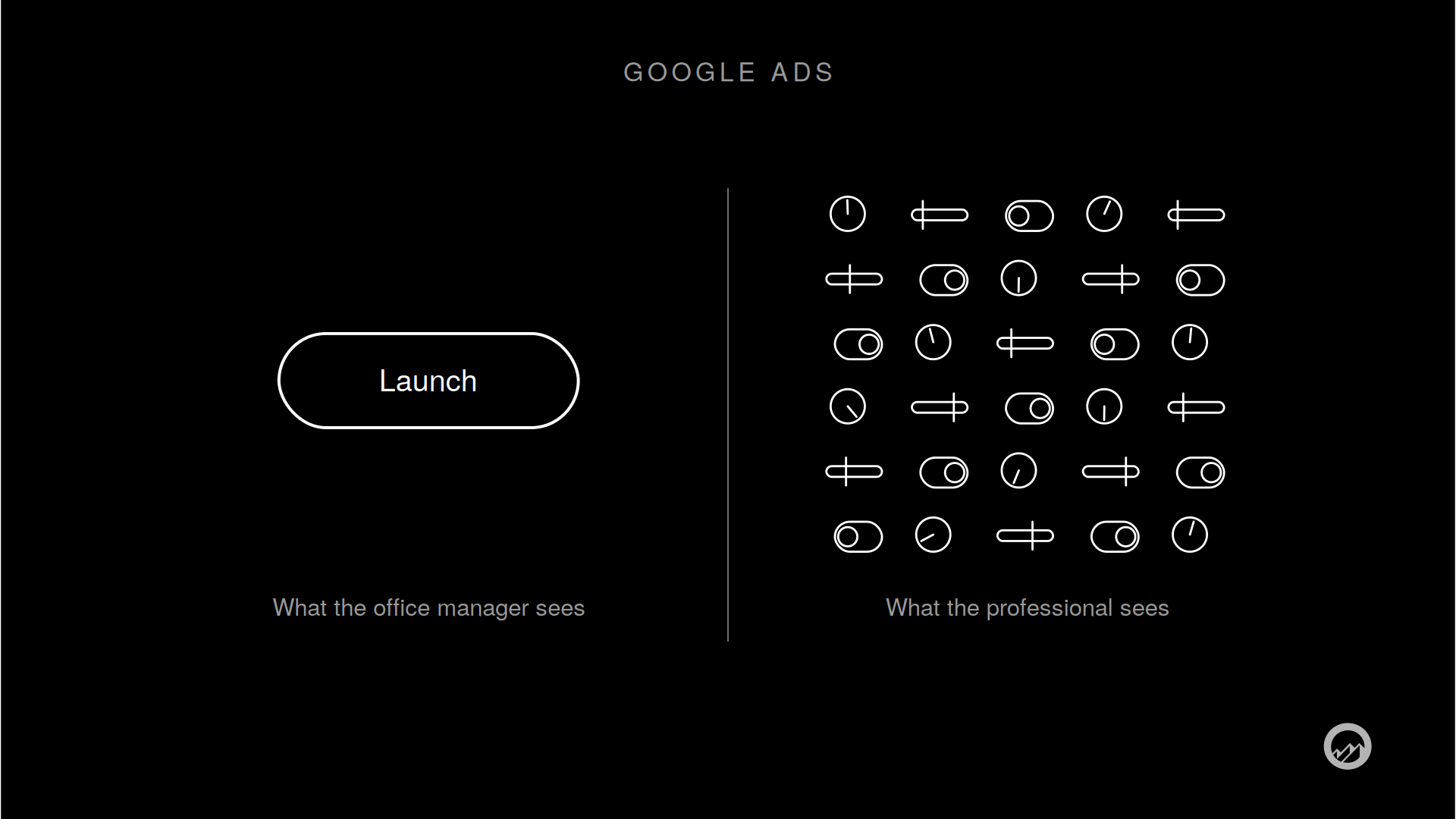
Running paid ads through a downturn is the most profitable move a service business owner can make, and pulling back is how you hand your competitor their best year. The way I see it, this is not even a brave bet. It is simple auction math.
I watched this play out during 2020
In 2020, a lot of businesses paused their ads overnight. Our clients who kept running saw the most profitable stretch for ads I have seen in over a decade of managing Google and Meta campaigns.
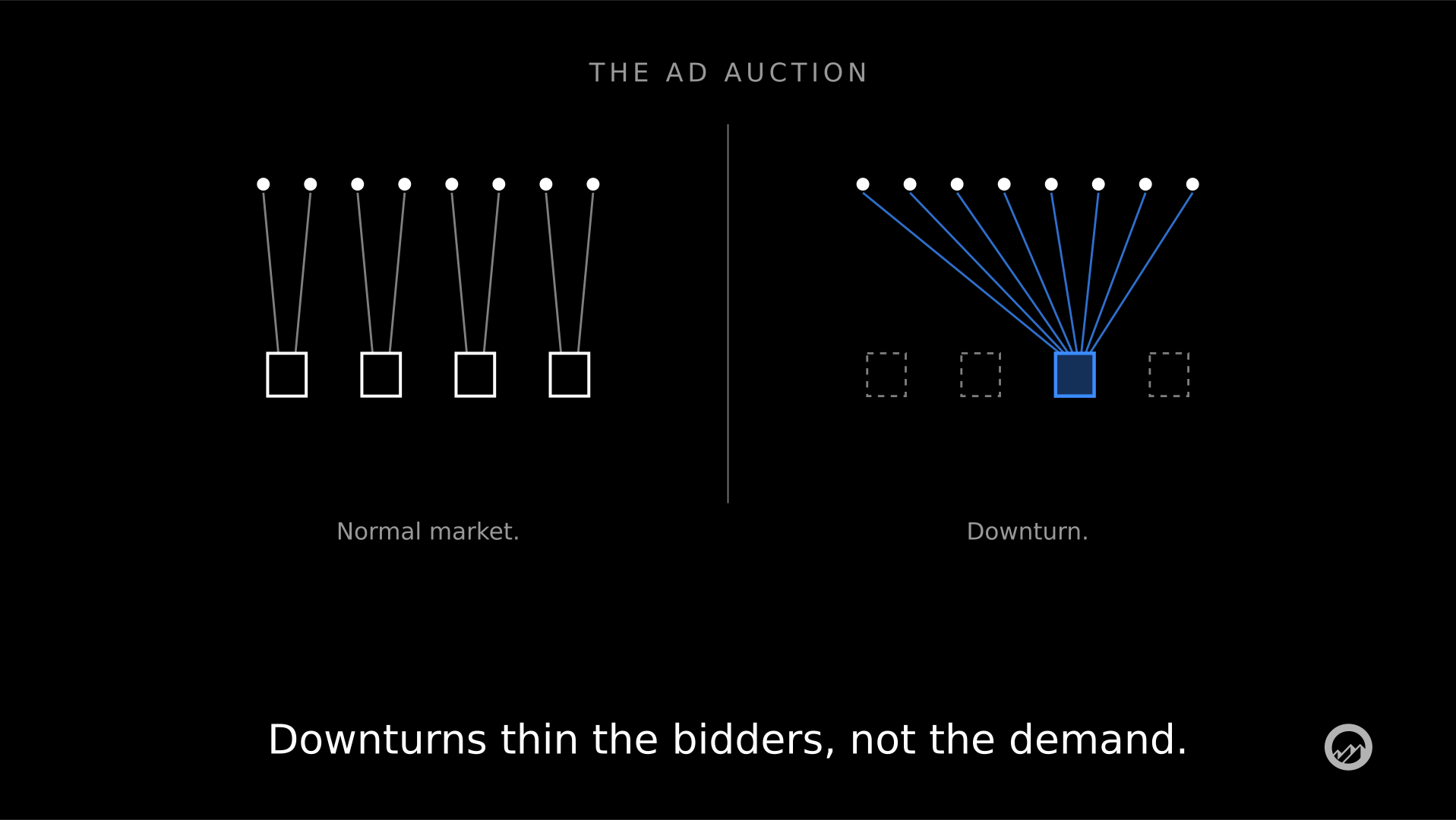
The reason is mechanical, and you do not need to be a marketer to follow it. Google and Meta ads work as an auction, meaning you bid against other businesses for the same eyeballs. When everyone pulls out during a tough economy, the businesses that stay get better cost per impression, better cost per click, better cost per lead, and a better return. Simple math, simple algorithm.
The news that made me write this
Entrepreneur, the business magazine, just published a piece arguing that cutting brand marketing in a downturn backfires. The author, who led marketing at a company called Ryder, makes the case that when performance marketing eats the entire budget, a company stops creating demand and only harvests what already exists in the market.
Cut for long enough and the leads get harder to close, more expensive to win, and slower to come back when the market recovers. He also warns that brand awareness is not a light switch you can flip back on when the economy loosens. Go dark while conditions are tough, and the competitors who stayed visible capture most of the recovering demand while you rebuild recognition at a higher cost.
The part most owners miss: speed
His strongest evidence is about speed, not volume. At Ryder, his team tracked regional website traffic jumps of more than 20% within five seconds of brand campaign airtime, then mapped that visibility against active deals. When brand messaging was running in a market, prospects moved through the sales pipeline significantly faster. The ads did the trust-building before anyone picked up the phone.
That matches what I see with local service businesses every week. A homeowner who has seen your name for months calls you already half sold. A cold click grills you on price. In my experience, the businesses that stay visible through slow seasons close faster and haggle less once demand comes back.
Why this hits local businesses harder
The Entrepreneur article is written for companies with CFOs and boardrooms, but the stakes are sharper for a plumber, a dentist, or a clinic owner. Your auction is your service area. When two of the five companies you compete against pause their ads, your cost per lead can drop that same week, because there are simply fewer bidders for the same searches.
It works the other way too. If you are the one who pauses, every competitor still running just got your share of the demand at a discount. My bet is the next slow stretch will follow the same pattern as 2020: most owners will cut, a few will hold, and the few will buy the cheapest leads of the entire cycle. As a Google and Meta Partner for over 10 years, we have seen that pattern repeat often enough that I no longer treat it as a theory.
Downturns do not erase demand. They thin out the bidders, and the cheapest leads go to whoever is still standing at the auction.