
What if you could reliably generate an extra $20,000–$30,000 in monthly revenue for a physiotherapy clinic — with a documented, repeatable system? That's exactly what we do at North Digital using a combined Google and Meta Ads strategy. In this post, we're breaking down the entire system: the numbers, the ad structure, the landing page, and the lead tracking spreadsheet we use with our clients. Everything is available as a free download.
The Numbers: What This System Actually Delivers
Before diving into the how, let's start with the results. Here's the ROI breakdown we use with our physiotherapy clients:
- Ad spend per month: $2,500 (adjustable based on client goals)
- Cost per lead: $40 (based on real campaign data)
- Leads per month: 63 qualified leads
- Lead-to-patient conversion rate: 35%
- New patients per month: 22 (35% × 63)
- Lifetime value (LTV) per patient: $1,200 (industry-established figure)
- Total value generated per month: $26,250 ($1,200 LTV × 22 new patients)
Return on Investment
When we manage this system for a client, the total monthly investment is $4,300 — that's $2,500 in ad spend plus a $1,800 management fee. Against $26,250 in generated value, that's a 610% ROI. If you're running this yourself and eliminating the management fee, the ROI climbs to over 1,050%.
We've built a free ROI calculator that mirrors this exact model — it's included in the downloadable resource pack linked at the end of this post.
What a Qualified Physiotherapy Lead Looks Like
The leads this system generates aren't vague form submissions. They include the prospect's name, phone number, email address, preferred contact time, and a custom message describing their condition. A real example from one of our clients:
"I have a knee strain that comes and goes for six weeks now and was recommended to see a physiotherapist."
That's a red-hot lead with a clear problem, a referral trigger, and an intent to book. This is the quality of lead the system is designed to produce — not tyre-kickers, but people actively seeking physiotherapy care.
Step 1: Meta Ads (Facebook & Instagram)
Meta ads — displayed across Facebook and Instagram — form the first pillar of this system. They're the highest-volume, lowest-cost-per-lead channel in the mix.
Real Campaign Performance
Across one of our active physiotherapy clients, Meta campaign data shows:
- 507 leads collected
- 926,000 impressions
- $42.75 average cost per lead
- $21,000 total ad spend
Within the physiotherapy-specific campaign for a single location, the best-performing ad set achieved a $36.80 cost per lead across 70 leads.
Dynamic Creative: The Key to Meta Ad Efficiency
The single most important setting in our Meta ad setup is Dynamic Creative. With this enabled, Meta automatically combines multiple images, videos, headlines, and descriptions into hundreds of ad variations — then uses its algorithm to serve the best-performing combination to each individual user.
For our physiotherapy campaigns, we typically upload:
- 4 portrait-style videos (portrait outperforms landscape in our testing)
- 5 variations of primary ad copy (all five templates are included in the free download)
- Multiple headlines and descriptions for Meta to rotate and optimise
What Makes a High-Converting Physio Video Ad
The best-performing video ads in this niche share a few consistent characteristics:
- Pattern interrupt in the first frame: An eye-catching visual (such as a car crash or injury scenario) stops the scroll immediately
- Authentic clinic footage: The practitioner or clinic manager speaks directly to camera in the actual clinic environment
- A low-friction offer: A free 10-minute phone consultation removes the barrier to first contact and acts as a soft sales call to convert prospects into booked appointments
- Simple, direct CTA: "Fill in the form below or give us a call" — no ambiguity, no distractions
The free consultation offer isn't mandatory — but it has consistently lowered the barrier to first contact and improved conversion rates for our clients.
Step 2: Google Ads
Google Ads is the second pillar of the system. While the cost per lead is higher than Meta, the intent behind each click is significantly stronger — these are people actively searching for physiotherapy services right now.
Real Campaign Performance
For the same client referenced above, Google Ads data shows:
- $21,000+ in total ad spend
- 4,000 clicks
- 196 conversions (leads)
- $108 cost per conversion
The higher cost per lead is expected and intentional. Google leads convert at a higher rate because the prospect is already in active search mode. By running both channels simultaneously, we balance volume (Meta) with quality (Google) to optimise the overall system.
Google Ad Structure: Responsive Search Ads
Similar to Meta's Dynamic Creative, Google's Responsive Search Ads (RSAs) allow you to input multiple headlines and descriptions that Google automatically combines and tests. Our standard setup includes:
- 15 headlines (all templates included in the free download)
- 4 descriptions (also included)
Google dynamically assembles these into the best-performing ad for each search query and user profile. The ad itself is relatively constrained — it's text-only — which is why the landing page becomes the real competitive differentiator.
Step 3: The Landing Page — Where Clicks Become Leads
If there's one element of the Google Ads funnel that separates high-performing campaigns from average ones, it's the landing page. This is where you can genuinely outcompete other clinics — and it's where most advertisers fall short.
The Core Design Principle: Eliminate Distractions
Our landing pages are built around a single principle: give visitors exactly two options — request an appointment or call the clinic. That's it. No navigation menu. No blog links. No social media icons. Human psychology is clear: more choices lead to fewer decisions. By removing every exit except the desired action, conversion rates increase significantly.
Landing Page Structure (Section by Section)
Here's how our proven physiotherapy landing page template is structured:
- Keyword-rich headline: Directly mirrors the Google ad copy to maximise Quality Score and ad relevance. Google crawls the landing page and rewards high relevance with lower CPCs and better ad placement.
- New patient offer: A compelling introductory offer (e.g., a discounted first consultation) to incentivise action.
- Contact form (above the fold): The primary conversion mechanism — name, phone, email, preferred contact time, and a message field.
- Clinic overview: A brief, trust-building description of the practice and its approach to patient care.
- Practitioner profile: A photo and short bio of the lead physiotherapist to build personal trust.
- Google Reviews: Real patient reviews pulled from the clinic's Google Business Profile to provide social proof.
- Services list: For multi-service clinics, a clear breakdown of treatments offered.
- Multiple CTAs throughout: Every CTA on the page points to the same two actions — book an appointment or call. No exceptions.
- Footer with map and contact details: Reinforces local credibility and makes it easy for prospects to find the clinic.
We build and manage our landing pages using Unbounce — a platform purpose-built for conversion optimisation. It allows us to A/B test page variants, track performance, and integrate seamlessly with Google Ads. A discounted link to Unbounce is included in the free resource pack.
How the Two Funnels Work Together
The full system operates as two parallel funnels that feed into a single lead management hub:
- Google Ads Funnel: Search ad → Landing page → Lead form submission or phone call
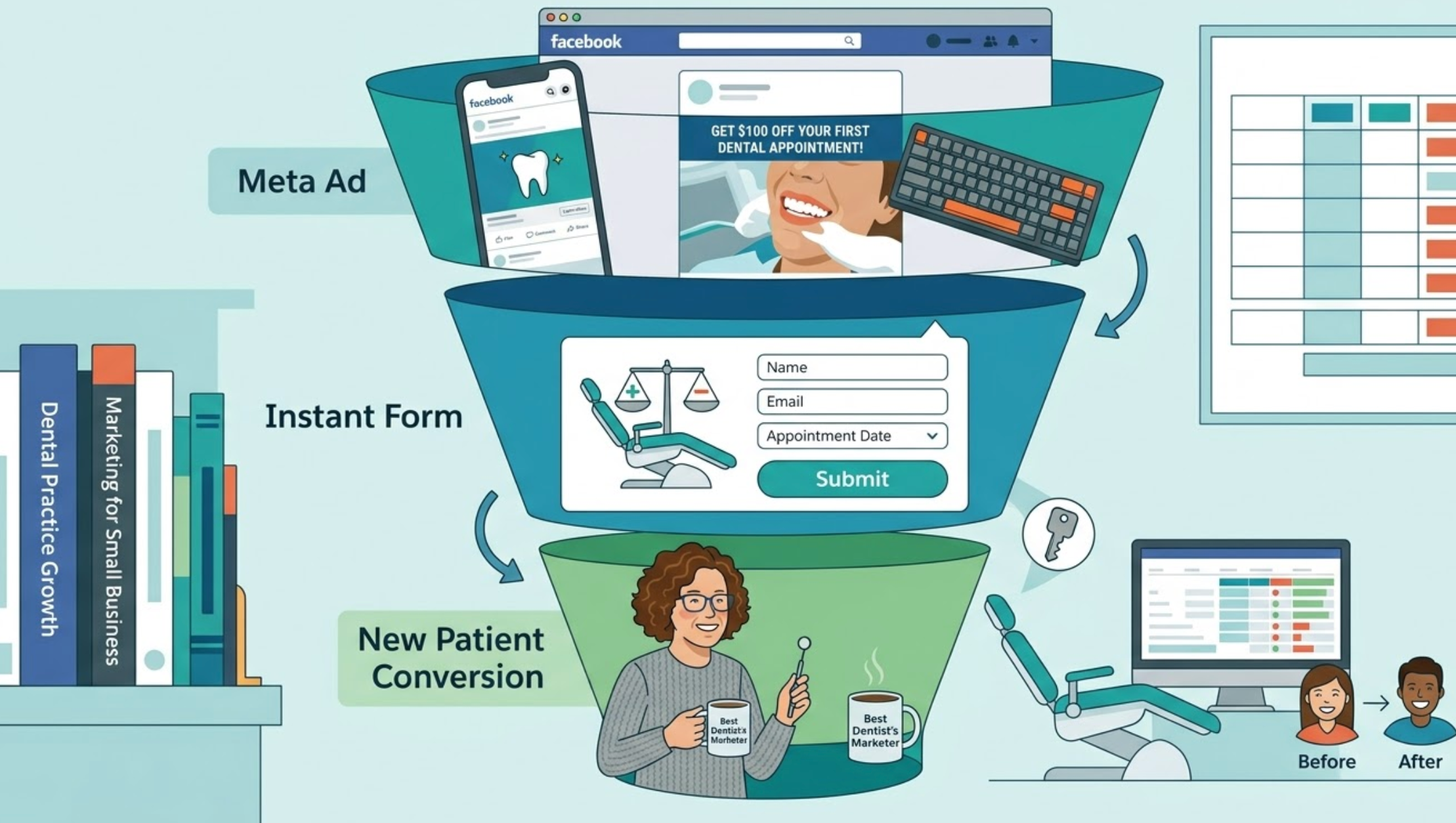
- Meta Ads Funnel: Facebook/Instagram ad → Lead form (native or landing page) → Lead captured
Both funnels feed into a centralised lead capture spreadsheet — the operational core of the entire system.
Step 4: The Lead Capture Spreadsheet
Generating leads is only half the battle. Converting those leads into booked appointments is where the real revenue is made — and that's what the lead capture spreadsheet is designed to facilitate.
What the Spreadsheet Captures Automatically
The left side of the spreadsheet is populated automatically via Zapier, which connects Meta, Google, and Unbounce to the Google Sheet in real time:
- Date and time of lead submission
- Lead source (Google or social media)
- Name, phone number, and email
- Preferred contact time
- Custom message describing the patient's condition or reason for enquiry
The Follow-Up Protocol
The right side of the spreadsheet is managed by the clinic's front desk team. We recommend a structured four-touch follow-up sequence:
- Follow-up 1: Within 24 hours of the lead coming in
- Follow-up 2: Day 2
- Follow-up 3: Day 3
- Follow-up 4: Day 7
Each follow-up is logged in the spreadsheet with notes on the outcome. The final column records whether the lead booked an appointment — this data feeds back into our campaign analysis to identify which ads are generating the highest-quality, most bookable leads. The goal is never just leads; it's booked appointments and new revenue.
The Technology Stack
The automation that powers the lead capture system is built on three tools:
- Zapier: Connects Meta, Google, and Unbounce to the Google Sheet — no manual data entry required
- Unbounce: Landing page builder optimised for Google Ads conversion performance
- Google Sheets: The shared lead management hub accessible to both the agency and the clinic's front desk team
What's Included in the Free Resource Pack
Everything referenced in this post is available as a free download. The resource pack includes:
- ROI calculator spreadsheet — model your own physiotherapy clinic revenue projections
- 5 Meta ad copy templates — proven primary text variations for physiotherapy campaigns
- 15 Google Ads headlines + 4 descriptions — ready to copy into your RSA campaigns
- Landing page template link — the exact Unbounce template we use for physiotherapy clients, plus a discount link
- Lead capture spreadsheet template — with the four-touch follow-up protocol built in
Final Thoughts
This system works because it's built on fundamentals that don't change: high-intent traffic from Google, high-volume awareness from Meta, a conversion-focused landing page, and a disciplined follow-up process. The combination of these four elements — executed consistently — is what drives the $20,000–$30,000 in monthly revenue growth we see across our physiotherapy clients.
Whether you're a clinic owner looking to grow your patient base, or a digital marketer building campaigns for healthcare clients, the templates and frameworks in this post give you everything you need to get started. Download the resource pack, set up the system, and start generating qualified physiotherapy leads.