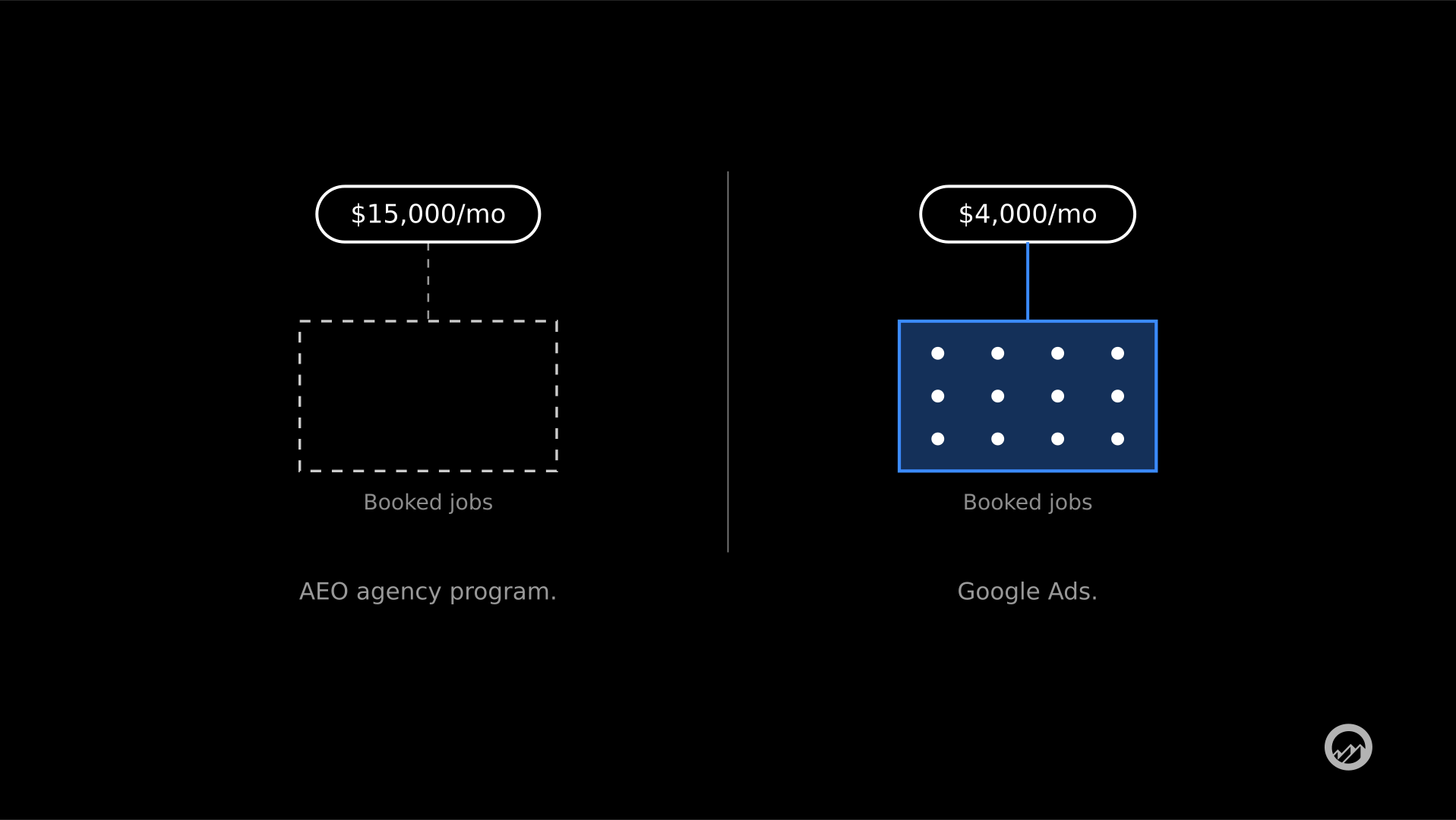
Raising your Google Ads budget because a competitor spends more than you is one of the fastest ways to burn money.
If you run your own ads for your clinic, dental practice or trades business, you are about to feel that pull. Google Ads has started showing advertisers how their spending compares with peers, as reported by Search Engine Land, a search marketing news site. You open your account, and there it is: a number telling you the other guys are outspending you.
The intended reaction is obvious. "My competitor is spending more, so I should spend more, or he will outcompete me." Sometimes that is true. Often it is not. The comparison tells you nothing about which case you are in.
Google gets paid either way
Remember who built this feature. Google earns revenue on every dollar of ad spend, so a screen that nudges owners toward bigger budgets serves Google before it serves you. That does not make the data fake. It means the data arrives with a built-in sales pitch, and you should read it that way.
In my experience running campaigns for service businesses, the owners who struggle most are the ones reacting to signals like this without checking their own numbers first.
The only equation that matters
Your ad budget should be set by one ratio: what it costs you to acquire a new customer, against what that customer is worth to you over time, which marketers call lifetime value. If you could sum up what we do at North Digital in one sentence, it is maximizing that ratio: the lowest possible cost to bring in a new customer, and making sure the customers who come in are good quality and stick around.
How much a competitor spends does not appear anywhere in that equation. Their budget is their problem.
What the peer comparison hides
A competitor spending double your budget might be printing money, or might be lighting it on fire. You cannot tell from the outside. They may target different services, cover a wider area, or send clicks to a landing page that converts half as well as yours.
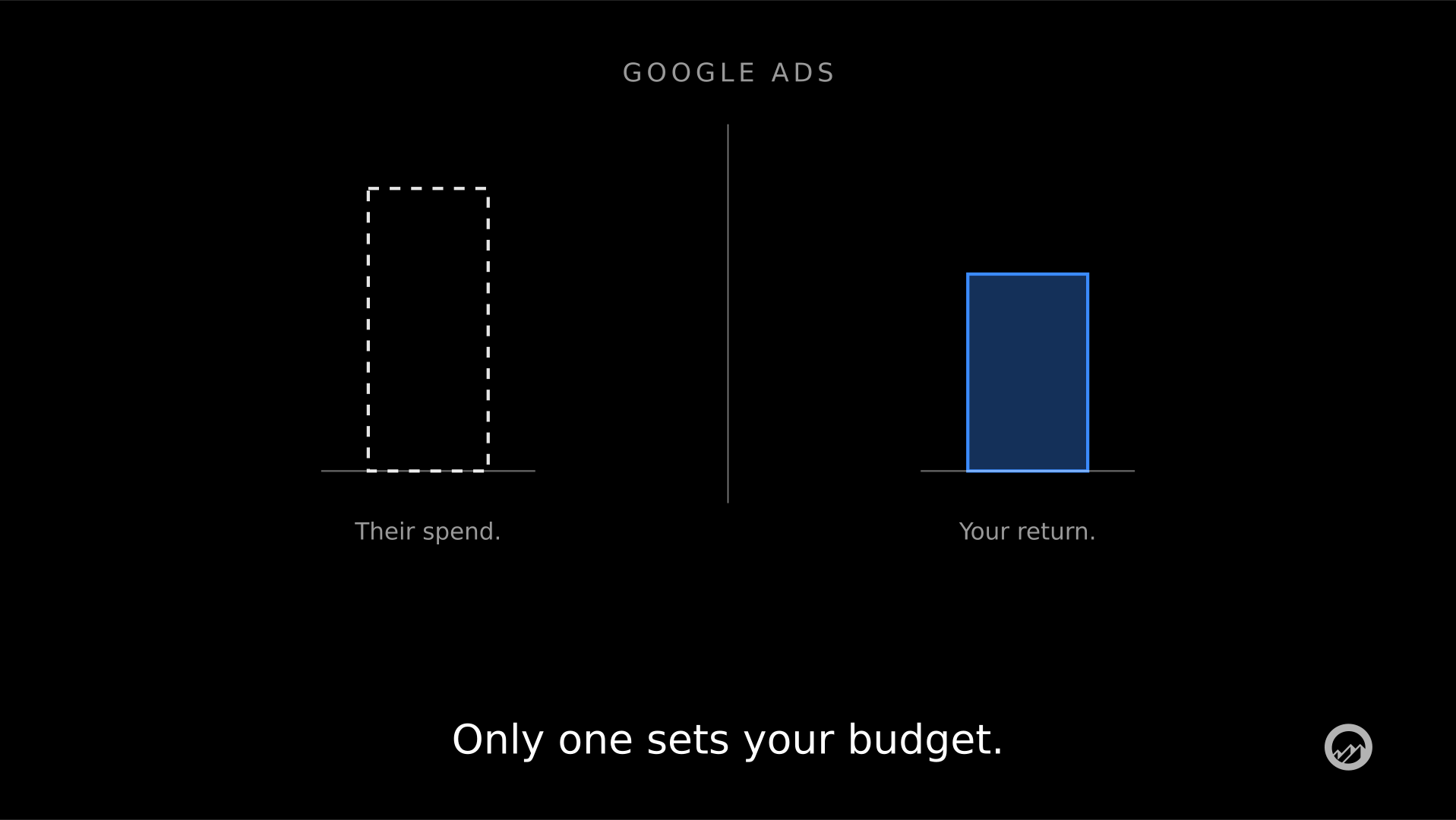
Spend is an input. Return is the result. Comparing inputs while ignoring results is like judging two restaurants by the size of their grocery bills.
When spending more actually makes sense
There are real cases where a bigger budget is the right call. If every $1,000 you put in reliably brings back customers worth far more than they cost, and your campaigns still have room to grow, cap your budget lower than that and you are leaving money on the table.
The way I see it, that decision should come from your own cost per customer and your own lifetime value, measured in your own account. My bet is that most owners who bump their budgets after seeing this new comparison will do it without checking either number, and their cost per customer will climb while their results stay flat.
After more than a decade managing millions in ad spend as a Google and Meta Partner, I have never once set a client budget by looking at a peer spend chart. I expect that will still be true ten years from now.
So when the report from Search Engine Land becomes a screen in your own account, treat it as trivia. Your competitor's budget is a fact about them. Your return on investment is the only fact about you that matters.