If you own a clinic, a dental practice, or a trades company, your Google Ads account was probably built the old way. One keyword per ad group, a separate campaign for every match type, maybe a desktop campaign and a mobile campaign. That setup was smart years ago. The industry conversation has now caught up with something we have been telling clients for a while: that structure is actively hurting you.
The news: granular accounts are starving Smart Bidding
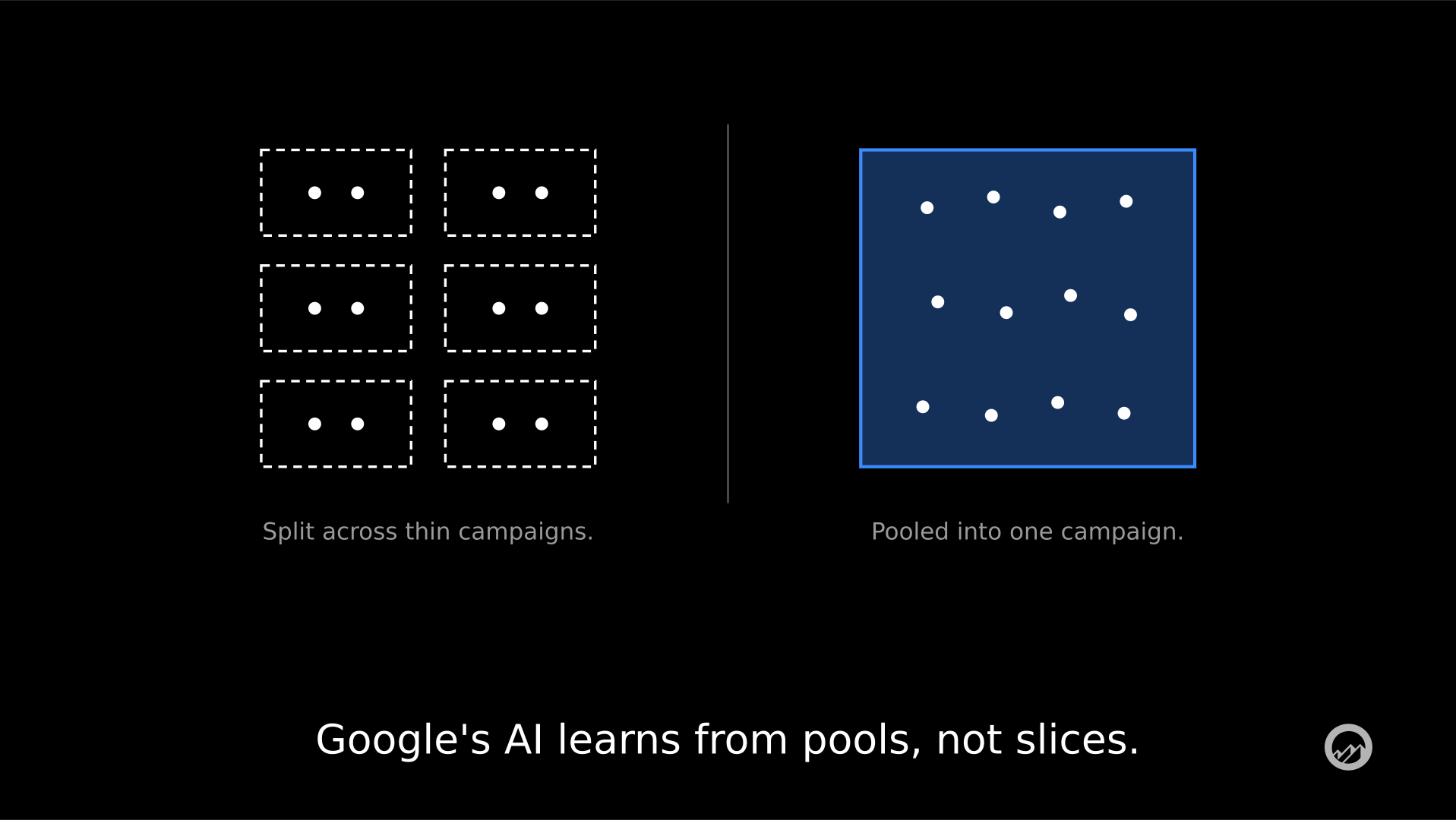
Smart Bidding is Google's automated system that sets your bid in every single auction. It runs on conversion data and signal history, and it needs real volume to make good decisions. The benchmark being discussed is roughly 30 conversions per month at the campaign level before the algorithm can read signals like device, location, time, and intent with any accuracy.
Most local service accounts never get there, because the budget is sliced across a dozen thin campaigns. Spread 60 monthly conversions across 12 campaigns and each one gets five. At that volume the algorithm cannot tell a real trend from random noise, so bids swing around and campaigns stay stuck in the learning phase, the period where Google is still figuring out how to bid for you.
There are other costs too. Heavy walls of negative keywords, the lists that tell Google which searches to skip, were built to keep each keyword in its own box. Today those walls block the longer, specific searches that convert well. And fixed budgets on tiny campaigns trap your money: a hot campaign can cap out by lunch while the campaign next to it sits on unspent budget.
My take
Account structure is one of the most important decisions in a Google Ads account, and most owners have never heard of it. Here is why I care so much. Google is one of the original AI companies. They have been running machine learning for decades, and over the last two years it has gotten exponentially more powerful. The way I see it, the main job in an account now is feeding that machine the right data: enough conversions pooled in one place, tracked against outcomes that mean actual revenue for your business.
The second half of the job is keeping the wrong data out. Junk conversions, fragmented signals, splits that exist only because someone set them up years ago. In my experience from managing millions in ad spend over the past decade as a Google and Meta Partner, the accounts that win consolidate on purpose and decline on purpose.
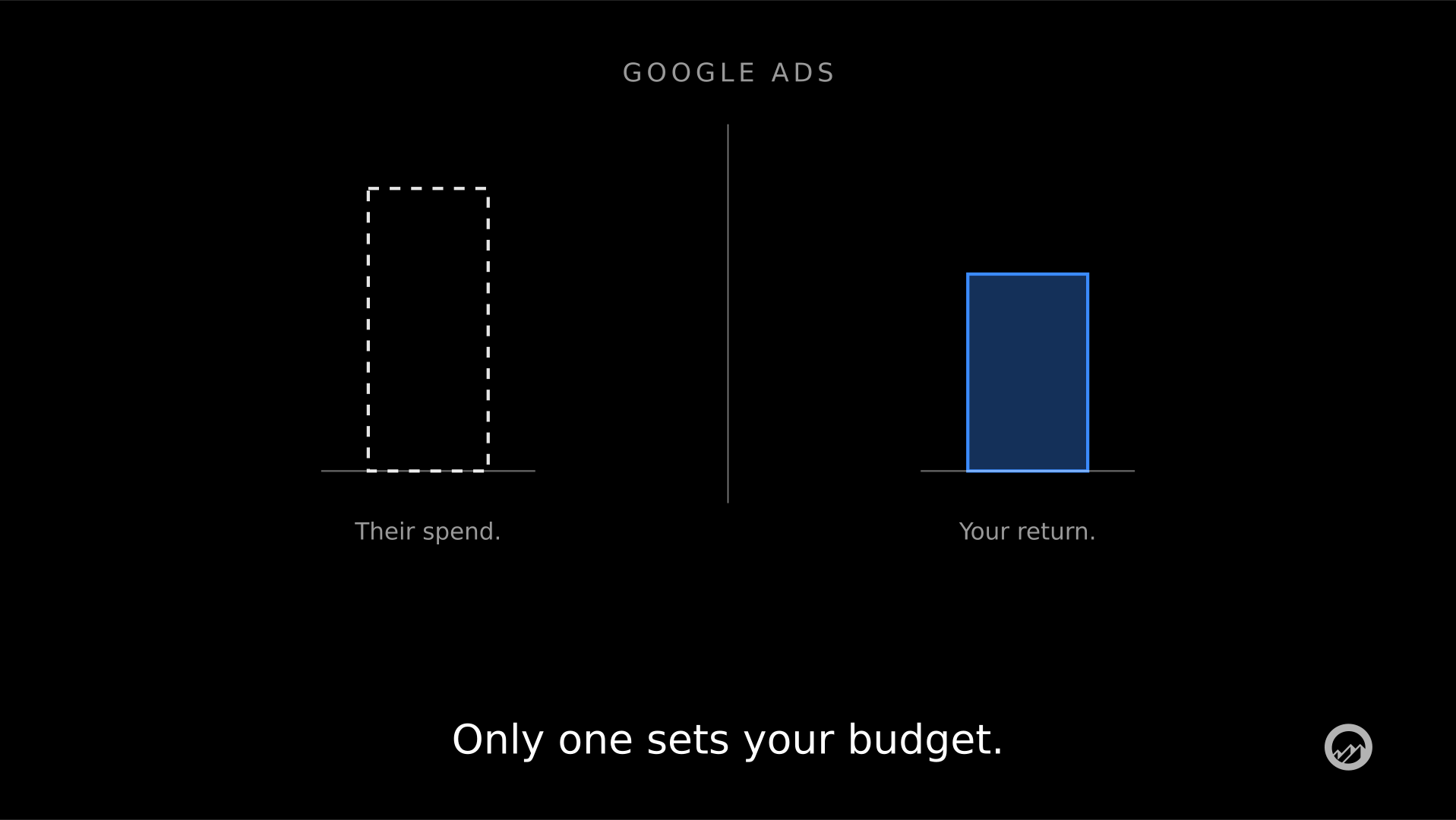
That word decline matters. Modernizing your structure does not mean accepting every suggestion in your recommendations tab. Google's incentives are not exactly aligned with yours. They want your ad spend. You want new revenue. Plenty of automated recommendations grow the first without growing the second, and you need to know which ones to refuse.
Where consolidation goes too far
None of this means collapsing everything into one giant campaign. Some splits still earn their place because they reflect real differences in your business. Merging a high-margin service with a low-margin one forces the algorithm toward an average that shortchanges your best work, so each should keep its own cost target. Brand searches, meaning people typing your company name, behave very differently from cold searches, so mixing them muddies the signal.
Separate campaigns also make sense when a region truly needs its own budget or its own positioning. The rule from this week's discussion is one I agree with: if a split changes your strategy, your budget, or the page the customer lands on, keep it. If it only changes how the same customer journey gets labeled in a report, merge it.
The automation wave makes this urgent
Google is expanding tools like AI Max, a feature that broadens keyword matching and auto-generates ad text on its own. The manual segmentation work those tools replace is disappearing whether you like it or not. The advertisers positioned to benefit are the ones with consolidated data and conversion tracking tied to revenue.
My bet is the gap keeps widening from here. I expect accounts that stay fragmented to pay more for the same leads every quarter, while consolidated accounts get steadier results from the same budget. Waiting does not have a payoff.
How to prepare your business
1. Pull last month's numbers and flag every campaign with fewer than 30 conversions.
2. Merge campaigns that differ only by match type, device, or a tiny geographic radius.
3. Keep splits only where margin, budget, or the landing page genuinely differs.
4. Open your recommendations tab this week and dismiss anything that raises spend without a clear revenue case.
If you want a second set of eyes on how your account is structured before Google's AI decides for you, book a call with us.